The APR Design® Guide is widely recognized as the authority on how to design plastics packaging for recyclability in North America. Referenced by leading organizations around the world, our comprehensive design guidance and testing protocols allow you to measure each aspect of a package design against industry-accepted criteria.
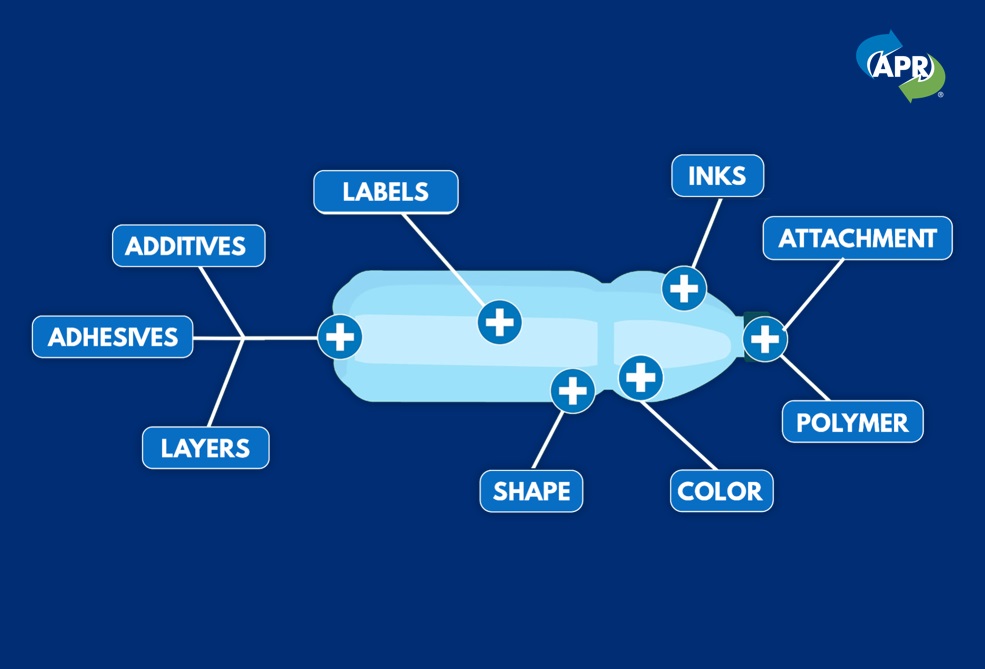
To get started with this free self-service tool, review the information below to learn how APR classifies package design features. Or, jump straight in: select your package’s primary material.
Get StartedPackaging made with the following materials is not recyclable per APR definition and fails to meet the criteria for consumer access to collection established by the U.S. Federal Trade Commission’s Green Guides. If the use of these materials cannot be avoided, APR encourages suppliers to use the design guidelines.


“Plasticsrecycling.org is an extremely valuable site that I consult frequently throughout my work at PepsiCo. The APR Design® Guide provides trusted and comprehensive plastics packaging design guidance, helping ensure the quality and supply of critically important recycled plastics. It’s a tried and true resource that’s continuously updated and improved upon, and a key asset for PepsiCo when designing and testing packaging.”
Edward Socci, Ph. D.
R&D Director
PepsiCo

“At Kraft Heinz our delicious products require a wide range of packaging needs. As we remain fully committed to our sustainability initiatives, we take APR Guidance very seriously. Whenever commercializing a new packaging format or understanding improvements required on existing packaging, the APR website is a resource my team & I use frequently.”
Chris Max
Sr Principal Engineer Packaging Sustainability
KraftHeinz Company

“The APR Design Guide is a critical resource for our Packaging Engineers and Designers at Unilever. There is no other resource that is inclusive of all packaging components. We reference it frequently to make the right choices for recyclability as we strive to achieve our goal to make our plastic packaging 100% recyclable, reusable or compostable by 2025. The Design Guide enables us to address recyclability challenges by working collaboratively with industry peers to get into the details and find solutions.”
Melissa Craig
Senior Manager, Packaging Sustainability North America
Unilever

APR offers several on site and remote Training Program options tailored to your company’s unique needs. By meeting one-on-one with your design, sustainability and/or market teams, we can help your company design recycling compatible packaging.
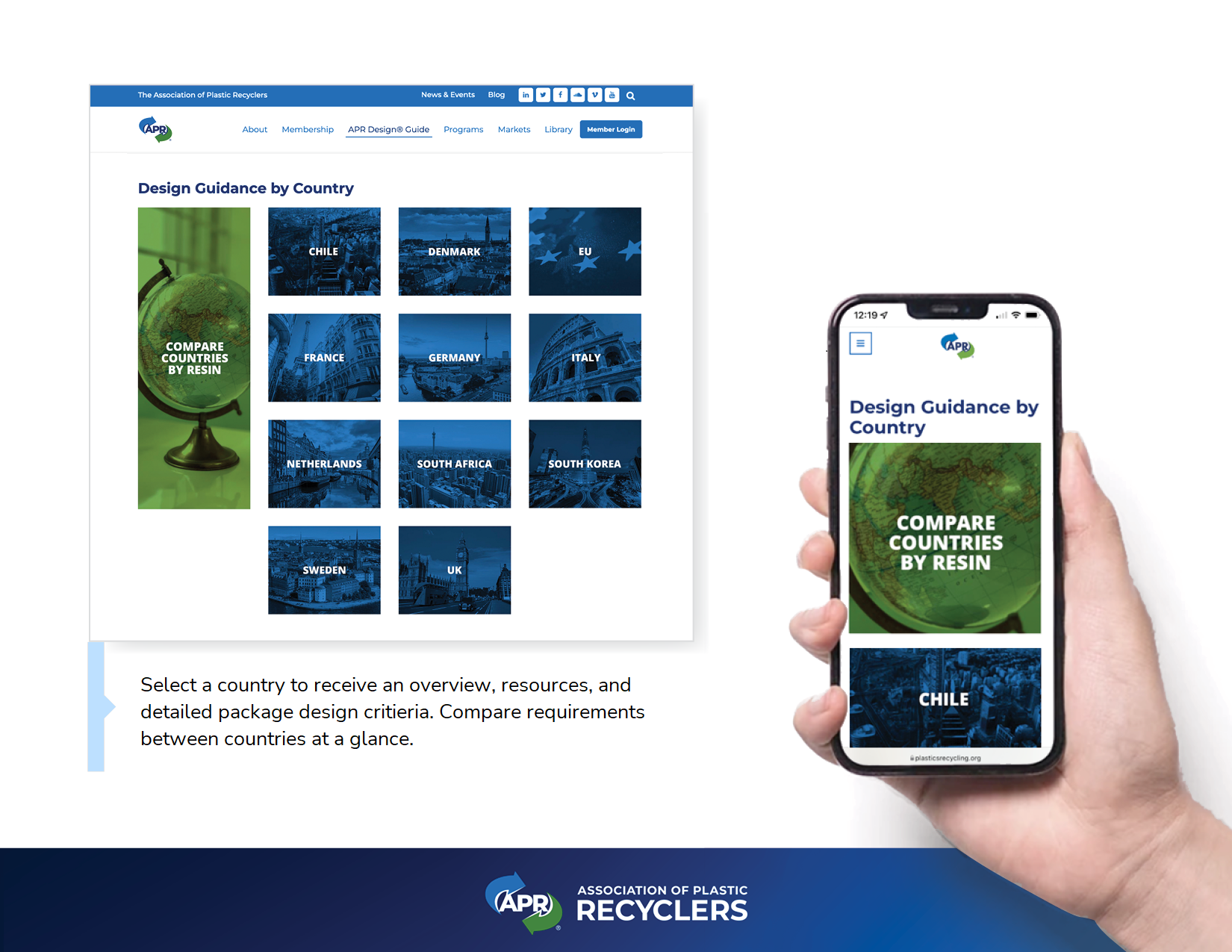
The APR Global Design Catalog is your all-in-one access to current plastic packaging recyclability guidelines around the world.
APR PCR Certification provides transparency to support a reliable, robust PCR market. Any plastics reclaimer generating PCR pellet or flake can participate in this program to provide customer assurances in the authenticity of their product.